

I got Kicked Out of Girl's Night for Being a Cheater
If he wanted to he would, but would he really?

During the human phase of prepubescence, with a kaleidoscope in our bellies, when we encounter the hormone oxytocin it is really where we hold an abstinence toward overtly scrutinizing what the feeling of love really signifies. We merely allow it to sink and soak—becoming sponges of absorption and infatuation.
Undoubtedly, this shifts after the first heartbreak the human encounters. Now, the experience which was once free of scrutiny, shifts into a question.
Is love a mere sentiment, or the fashionable and conscious accumulation of actions?
This question, which has been fried on a pan, turning from bright to a calcined black has lived many lives. Now individuals do not ask this question as much—especially women. Now they are tired of asking and philosophizing—romaniticising. it has turned them into spiteful bashers and into gleeful convictors of the phrase “if he wanted to he would”
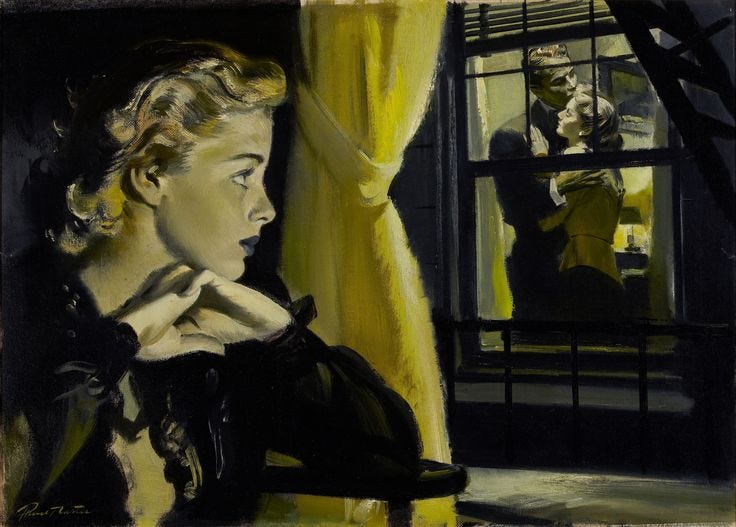
It is rather abundantly clear: when you find yourself at any gathering, sitting at a table—brimming with the female gender, each seat occupied with a distinct catalog of ages, birthmarks and skin blemishes, the usual subject of conversation is how abysmal the dating scene is. The subject of men and their disappointing handling of the steering wheel is thrown around like a scorching pan. And it bubbles. It simmers atop the tongue of all the women in the circle:
Criminal infidelity. The phobia of commitment epidemic. Emasculation that turned him into a princess-like mermaid. Men whose lust shapeshifts them into brainless cannibals. Envious dandies. Men who deem communications and literature as useless degrees. Those who are lovers of the winter. Each experience–each archetype a popping bubble, making the boiling potion of modern dating a living hell. Giving the female gender more hissing tongues to spit on the opposite side.
“My fiancé cheated on me last month with his cleaning lady” a woman on the opposite end of the table stated, breaking the silence while twirling her wine glass around her hand.
“With the cleaning lady? Oh that’s horrible isn’t it? I’m so sorry. My ex-boyfriend left me stranded, said he wasn’t ready for that type of commitment” another young woman replied, adding to the circle of experiences.
“Oh talk about mine, he did not want to introduce me to his stuck up family. He made it clear I wasn’t what they expected for him.” Another blonde woman with craggy skin added.
“What an asshole, I can totally relate. My last situationship hid me around like I was some illegal, I obviously dumped him. Could not deal with being treated like a secondhand plate” A woman close to my seat sardonically added.
The circle continued with each woman adding their own crashes and discontents. I sat there, endeavoring to hide how uncomfortable I was. Bonding over their dilapidated romantic bones seemed like the only thread they had left in their lives–their last resort of hope.
“What about you?” they all asked, pointing their eyes and faces toward me, almost in cultish unison. For a quick glimpse, they appeared like zealous bunnies, who had been hunted down for so long—-been drawn blood for so long, that they were bloodthirsty for some reassurance that the male gender was terribly wrong and worth hunting down.
I stuttered for a second, wondering if I should have lied, remained truthful, or kept my mask of victimhood.
I took a deep breath while peeling my skin layers, reaching muscle and bone. “I am actually cheating on the two things I love the most. I don’t know I can’t help it, I love them but I am most definitely incapable of showing it. I can’t be the only one who loves like this right? I mean-” I said while shrugging, incapable of mobilisation or justification. Their eyes were glued on me with an expression of horror painted on their faces—perfectly crafted by Edvard Munch.
I was met with hollering and screaming—halfway inquisition and a disposal of my presence from the dinner like I was some fly trying to pester about my unethical and manly ways of loving. Clearly though, I was for them the living strike-out of their vivid theory “if they wanted to they would.”
Naively, I wore my honesty to the dinner because it was clearly the Godly decision—shining brighter and causing more scandal than any other slutty dress I could have worn. And now I write boldly, honestly and with the topping of shameful asininity to try and crawl back to the subjects I have cheated on—the ones I say I love most: God and my writing.
This atypical form of cheating might seem odd to a reader. Especially when it conforms to a form of infidelity toward two subjects which are as intangible as the air that oxygenates them.
And yet it is far worse than the typical cheating. For the subjects I cheat on largely involve the core of who I am—my face and my identity. For God, it is the spiritual portion of my body. My leadership, my metaphysical existence, my spiritual salvation, the guidance of my behavior. For my writing, and my identity as a crafter of words it conforms to my intellect. The way I articulate myself. How I stand in the face of society, and my foundation of an artistic legacy in this world.
Before I came up with the idea for this essay, my fingers and brain were focused on building the foundation of another one.
Sitting in a train, I had the juiciest title, the most hooking introduction. Bathing in my brain, all of it weighed just far enough for bits of ideas to spill, but not enough to overboard and land on my keyboard.
So I just stared at the screen. Writing one word every five minutes. Which led to picking up my phone. Mindlessly scrolling on social media, peeping on the boring lives of others, wondering when I would hit it off as an artist.
Clearly, anything else in the world was more interesting than writing my piece.
The trees perpendicularly lined outside, the men in the train, the Bob Dylan song blasting through my headphones.
Difficult to conceptualize, It’s like my brain and my fingers are in complete disagreement. I can neither pray nor write in the right way, consistently, or at the designated times. When my brain thinks, fantasises and longs for prayer time, my fingers just cannot do it, will not move or even do what I want.
In my head, I have already written a multitude of books and projects. I am in fact, a New York Times Best selling author. A performing poetess. A Pulitzer Prize winning journalist. I have written essays when brushing my teeth, when showering, when I am spending time with my loved ones, on the commute on the way home, in my sleep. But in reality my computer screen remains blank. It’s truly all crickets and flies.
Similarly, my mind is married to Jesus. I think, and breathe the Bible, Gregorian chants, the nature of the gospel, Old Testament history. Yet I cannot spend time reading the word, inhaling it, or even properly embody it everyday.
Instead of reading the psalms and painting them across my life, I read the latest New York Times article on Vogue using AI models and computer science majors struggling to find a job.
Instead of closing my eyes and speaking to God, I get steered toward the impurities of my own skin. The chit chat that is on television, the messages on my phone and thoughts about past, present, future.
I am also embarrassingly unable to nurture my love and productivity for God or my writing when my loved ones are around. Praying and Writing are sacred, so I must always hide and exile myself to an island to properly give them the attention that they deserve.
The last guy I dated, while putting his arms around me and lusting over the sight of my lips blatantly said to my face: “Just so you know, I'm not introducing you to my family.” When he said that, it stung me. But in retrospect, I am not allowed to get upset in any way or form, because that is exactly the way I love. I embody the noun without being the verb, while flirting with the idealised thought of my duties.
That is exactly what loving wrong means. Parading a flirtatious attitude with labelling who you are without knowing the terms and conditions of sacrifice and investment.
You are a girlfriend, boyfriend, partner, husband, wife, daughter, son, doctor, writer, actor, singer, teacher but the identity simply ends at the linguistic distinction.
In all seriousness though, what is the formula behind men not knowing how to love, and what do we do when inaction far overpowers love?
The Christian philosopher Aquinas makes the argument that the spirit and the body are two separate entities that encompass a human. Although this is not necessarily a revolutionary argument, the core of this gets at the idea that the fleshly desires that are corrupted lead you away from the things of the spirit you know you want or are meant to do.
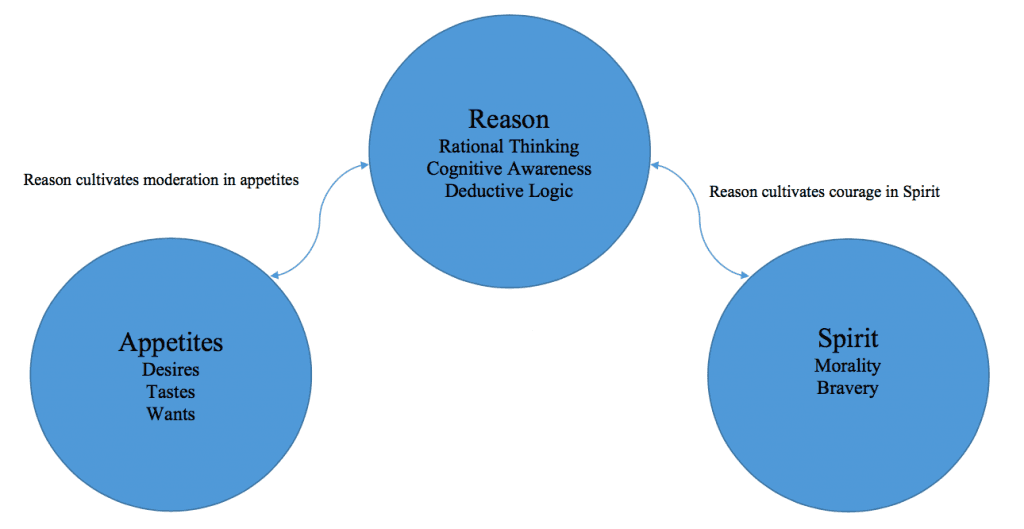
Similarly, the ancient philosopher Plato came up with the idea of the “tripartite theory of the soul” in which it conceptualised the notion that humans were divided into three parts: the rational, spirited, and appetitive.
He further argued that some individuals were governed by appetite (meaning corrupted desires) more than spirit or rationale.
In my subtle defence though, I am not like any other man who cheats or does not love right. As a result of my unfaithful acts, I am constantly overridden by a guilt that hums me out of sleep and buzzes when I wash dishes to make them glisten. And unlike your average tinder man and your seventeen year old chad boyfriend with no ID, my infidelity is not guided by a banal lust for fifteen minutes of pleasure.
I mean, in the English language cheating is a broad term and with its many faces it is quite the insignificant word. We could frankly utilise so many other descriptions that capture such a degree of betrayal.
In its metaphorical significance, or in the way we colloquially refer to infidelity—I see it as visually equal to a chameleon’s skin shifting colours, and bunnies skipping through designated hoops in competitions. Silly, asinine, and unserious.
Socially we take it seriously. I mean with dragon flamed quips and phrases I got thrown out of a dinner for it. However, linguistically we are quite lazy in its inconsequential and playful description.
The word cheating in itself, creates the unserious visual image of a child not caring for the rules in the playground. A woman wrongly braiding hair. An illegal placement of a chess piece all to scream “checkmate!”.
During the 19th century, the romantics were much more serious in their description of cheating in romantic relationships. Apart from occasional quirky euphemisms bathed in prudish perfumes, “Adultery” and “infidelity” were the typical words you’d find. Phonetically they are much more stark. And in their origins they are associated with corruption, decay and moral erosion.
It is as simple as the fact that the way in which we label subjects, and concepts through language reflects the manner in which we behave toward them and internalise them. As much as cheating is a lazy word, it is a mirror of how we approach and perceive relationships nowadays. Not that cheating suddenly spawned around the 20th century and usurped the 21st century, but in all those bygone eras relationships were considered a covenant. Now, they are the latest trendy sport.
The word cheating is so embarrassingly lazy and it does not even have anglo-saxon roots. It is in fact borrowed from the French term Escheat which meant the action of the government taking property away from a deceased if they did not possess any children. As I came upon this discovery, I audibly sighed and rolled my eyes. Cheating is far from the mere unfairness of property disownment. Cheating is not only the unscrupulous betrayal of your partner's vows, but of your own identity, the one you said you’d be and embody.
It is as simple yet complicated as this: the moment our society began to allow the importance of language and its accuracy to become a mere fly in the wall, was the moment our attitudes began to erode even more.
French thinker Michel Foucault argued that language and words had more power than we gave them credit for. They did not just exist in themselves, they bore the weight and responsibility of shifting thoughts, behaviours and shaping the internalisation of actions. George Orwell’s 1984, took this to a fictional level, in which Newspeak—a narrowed and lazy form of language became a political tool to control individuals and their attitudes.
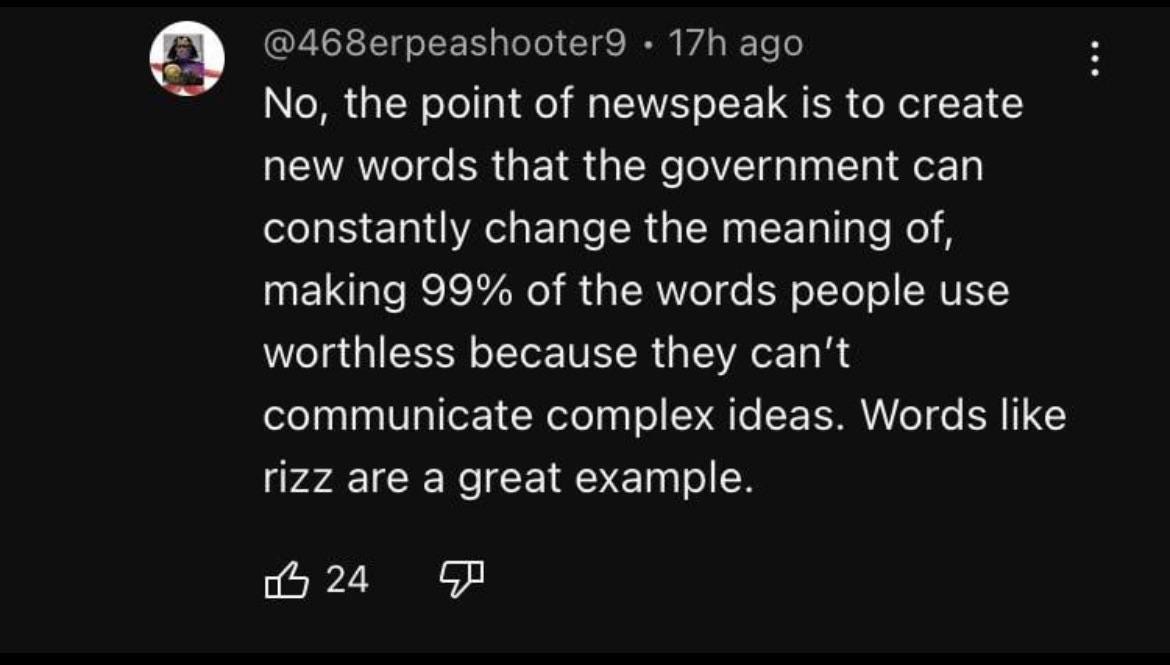
So if the concept of infidelity gets narrowed down to the word “cheating” which is phonetically as unserious as a reckless teenager forgetting to study for a test and endeavouring to play it smart, then two things are going to occur. First, as a society we are doomed to get accustomed to infidelity where we stop seeing its moral weight–consequently leading the ones being cheated on to perceive it as a normal occurrence. Secondly, the ones with the inclination to be unfaithful, or with the thought to do so will picture it as an asinine thing that lacks moral weight.
However, I do believe this could perhaps be an error of the English language and the lack of figurative language that we attribute to our daily communication. In my country, we have an idiom to describe infidelity: “poner los cachos”—translating to “putting the horn on someone.” Unlike the term “cheating” This phrase surely creates a visual imagery that is devilish. You’re putting the horns on someone, actively making them look foolish and devilish. Again, a distortion of their identity and who they thought they were.
I wish I could have bonded over this with all the women in the dinner. Giving me no time to even defend myself, I could have let them know that in actuality I do not love like a man, nor do I cheat in romantic relationships, and the thought of such actually disembowels my stomach and makes me the epitome of a nauseated bitch. The things I need to love right, and that love me right, in all the tender ways such as God and my writing I do not.
Unfortunately in romantic relationships I am a devout nun in the limbo between a sacrificial figure and a teenager with limerence. I stand between a pathetic yearner and a bolter.
I have the privilege to write and laugh about this because I do not have the right to complain about how I have been a Shakespearean figure of tragedy in romantic relationships. Especially when in shapes and forms I do the same that has been done to me.
After being wronged by the pitiable and skinny teenage boys I have dated with no ID or remote thought of who they even are, I threw kicks, recriminated them with blazing poems, screamed at them and announced in speeches at parties how they loved so poorly and left me romantically malnourished.
They had to face me pointing at their romantic incompetence. I, on the other hand, am very lucky that the subjects I supposedly love the most are intangible and therefore unable to hold me accountable. My writing cannot scream at me, and for the exception of when I am deceased, I cannot face God like I would face a typical individual.
I suppose with my overtly-selective attitude when it concerns the menu of romantic and interpersonal horizons, I am the least to tell any individual to settle for less than what they want or deserve. And yet, there is nothing I wish more than to go back to that dinner, converse with those women and in a nuanced manner inform them of the ongoing and perpetual war that is occurring: the war of opposite magnetism.
The war where our mind and our bodies are in constant battle. Where we become disparaged and what we want to do according to our identity gets striked out by the banalities of the flesh, the insecurities of the mind and the tempests of the self. And of course, through this cultural belief, the famous quasi-expectation “if they wanted to they would” gets totally disproved.
Thank you for reading this week’s piece after being absent for almost a month. The formality of Wednesday/Sunday pieces are back next week!
This is a serious and thought-provoking piece, and it makes many excellent points. However, I must respectfully disagree with one aspect: the suggestion that the cultural and attitudinal shift you describe is primarily or mainly due to a specific use of language seems to me an oversimplification. While language certainly plays a role, it is not central.
This shift flows naturally from broader historical and philosophical developments—post-Enlightenment thought, modernity, materialism, individualism, and what some liberals might describe as the “death of God.” In addition to arising naturally from these currents, it has also been intentionally promoted by institutions and agents who favor a worldview focused on pleasure, material maximization, and individual autonomy. This combination of philosophical inevitability and deliberate cultivation has shaped Western culture in profound ways, from films and literature to academia and intellectual debate.
I thoroughly enjoyed reading this essay and hope you accept my input as a constructive contribution.
Wow I am beyond words. This was such a deep and profound perspective on things that needs to be unpacked in a group setting. I just finished reading 1984 a month ago and my jaw dropped when you brought the correlation to light. Ahhh I could write a whole essay myself on this piece. Subscribed so fast.